
Choosing the right flooring can dramatically enhance the look and feel of your home, but with so many hardwood floor types available, it can be tough to know where to start. From solid wood planks to engineered options, each material offers its own unique benefits, aesthetics, and maintenance requirements. In this guide, we’ll break down the most common types of hardwood floors to help you make an informed decision that aligns with your lifestyle, budget, and design preferences.
Understanding the Main Types of Hardwood Flooring
The world of hardwood flooring can feel overwhelming at first glance. Let’s explore the main hardwood flooring styles you can find today. Each type comes with its own benefits that match different needs and priorities.
Solid hardwood flooring
Solid hardwood floors are made from single pieces of wood cut straight from trees, usually 3/4 inch thick. These planks are tough – you can refinish them up to 10 times throughout their life. A well-kept solid hardwood floor lasts anywhere from 30 to 100 years, sometimes even longer.
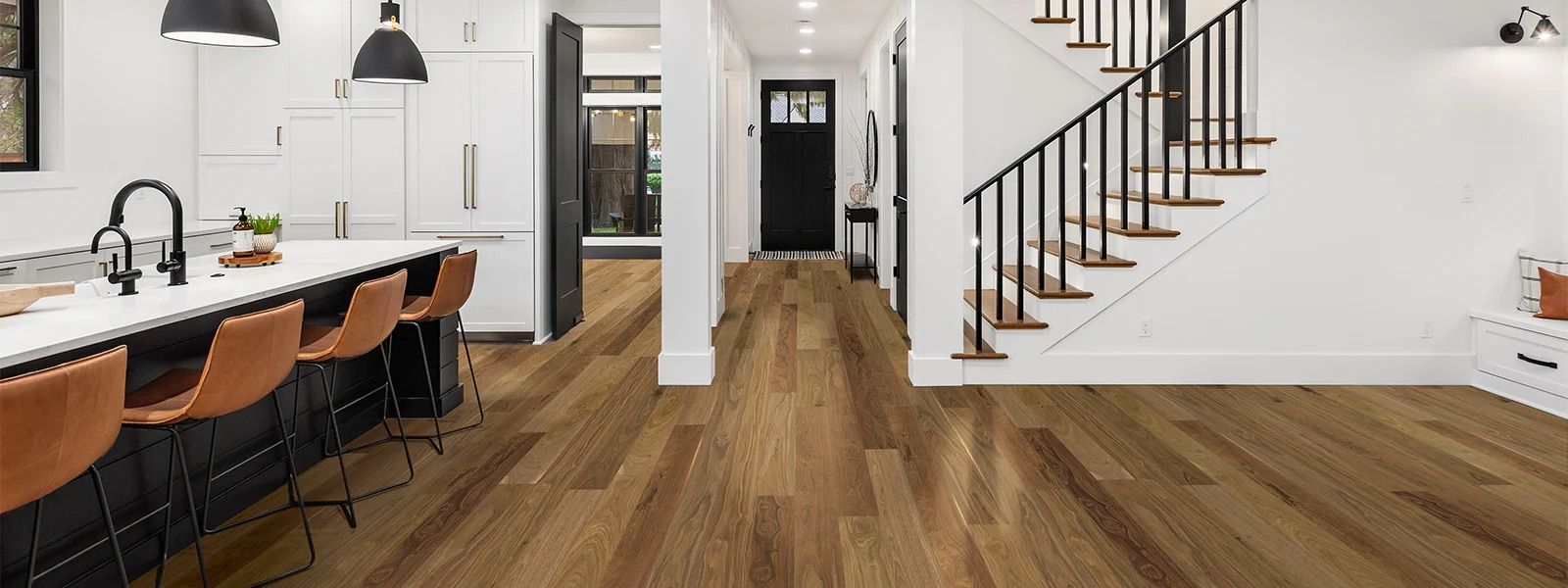
These floors aren’t perfect for every space though. It reacts quite a bit to humidity changes and shift as moisture levels go up and down. You should think twice before installing them below ground level or in areas that get lots of moisture.
Engineered hardwood flooring
Engineered hardwood combines multiple layers – a real hardwood surface bonded to high-quality plywood or HDF core. This clever design makes it more stable than solid wood, so it won’t expand and contract as much when moisture levels change.
The criss-crossed plywood layers help keep things stable, which makes these floors great for basements and concrete subfloors. It lasts 20-30 years – not as long as solid wood’s potential century-long lifespan. When considering hardwood vs engineered options, moisture resistance is a key factor.
Bamboo and cork flooring
Bamboo flooring isn’t actually wood – it’s a grass that grows incredibly fast, reaching maturity in just 3-5 years. Strand-woven bamboo is remarkably hard, sometimes tougher than Brazilian cherry on the Janka hardness scale.
Cork floors stand out as one of the softest hard surfaces you can get. It packs 200 million closed air pockets per cubic inch, which gives them natural bounce and sound-dampening properties. Cork also contains suberin, a natural wax that keeps insects away and helps resist fire.
Parquet and specialty styles
Parquet flooring creates eye-catching geometric patterns by arranging wood pieces in different ways. Unlike straight-laid floors, parquet combines small wood pieces into striking designs like herringbone, chevron, or basket weave.
These floors trace their roots back to 17th century France, bringing a touch of history to modern homes. Modern parquet comes in many forms, from simple 9×9 or 12×12 wood tiles to intricate custom patterns.
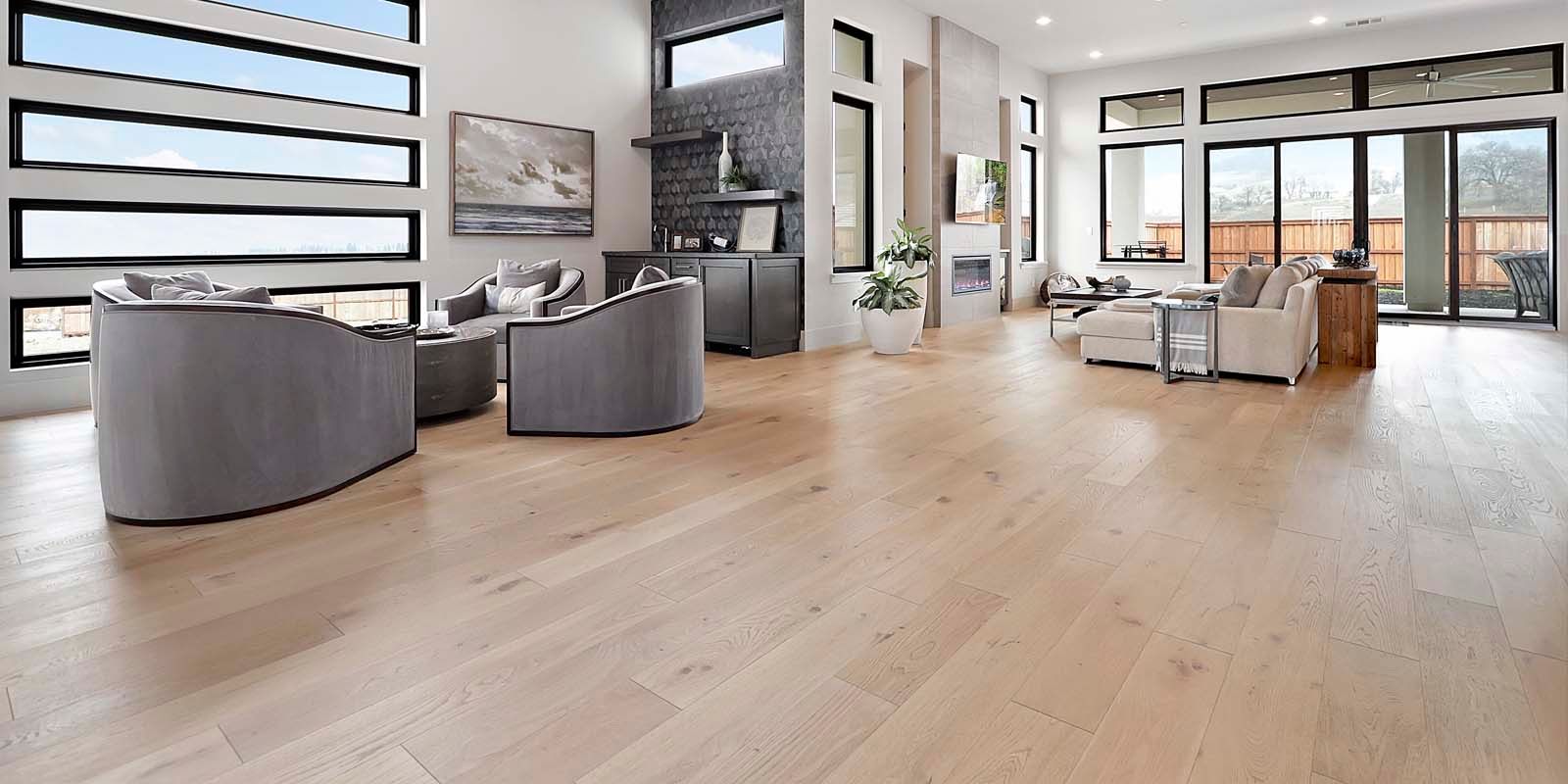
Your perfect hardwood floor depends on more than just looks. Think about how durable you need it to be, what kind of moisture it might face, and how much maintenance you’re willing to do.
How Wood Species Affect Look and Durability
Your floor’s appearance and durability depend heavily on the wood species you choose. Each wood type brings distinctive qualities that will transform your home’s character.
Domestic species: oak, maple, hickory
White oak stands as one of the most sought-after domestic hardwoods. Its Janka rating of 1,360 makes it exceptionally stable and resistant to moisture. The wood’s warm, neutral tones and subtle grain patterns create an enduring appeal that works beautifully with any décor style.
Red oak dominates the North American market and accounts for about two-thirds of hardwood flooring installations. The wood shows more prominent grain patterns and warmer reddish undertones, with a Janka rating of 1,290. Oak flooring remains a popular choice for its classic look and durability.
Maple flooring distinguishes itself through its clean, uniform look and robust 1,450 Janka rating. Basketball courts and high-traffic commercial spaces often feature this tight-grained hardwood because it handles wear remarkably well.
Hickory leads domestic woods in hardness at 1,820, which makes it 41% harder than red oak. Rustic or country-style homes benefit from its distinctive grain patterns and dramatic color variations that add rich character.
Exotic species: Brazilian cherry, acacia, tigerwood
Brazilian cherry (Jatoba) boasts exceptional toughness with a 2,350 Janka rating – almost double that of red oak. This premium exotic hardwood develops a deep, reddish-brown patina that enriches over time.
Tigerwood lives up to its name with striking orange backgrounds and dark brownish-black stripes that resemble vanilla fudge ice cream. The wood rates 2,160 on the Janka scale (170% harder than red oak) and combines unique aesthetics with remarkable durability.
Exotic hardwoods generally surpass domestic options in hardness. Notwithstanding that, hardness shouldn’t be your sole criterion when choosing floors.
Janka hardness scale explained
The Janka hardness test determines wood’s dent resistance by measuring the force needed to embed a .444-inch steel ball halfway into the wood. This standard helps predict how different species handle daily wear.
A higher Janka rating points to better dent resistance, but hardness represents just one aspect of durability. Wood grain patterns, finish quality, and moisture stability play equally important roles in your floor’s long-term performance.
Design Features That Change Everything
Small design details can reshape the look and feel of hardwood floors. Designers often overlook these elements that can make a big difference in your flooring experience.
Board width and length
Your room’s visual appeal depends a lot on the width of hardwood planks. Narrow boards (2-3 inches) make smaller rooms look spacious and give them a classic look. Wider planks (5-8 inches) help balance larger spaces and create a modern or rustic feel. Hardwood width can significantly impact the overall aesthetic of a room.
Length plays a crucial role too. Longer boards reduce seams and create better flow. Most hardwoods work best with 7-foot lengths, while wider floors need boards around 11 feet long. These proportions make wide planks look more impressive and create a bold statement.
Edge styles: beveled, square, eased
Edge profiles change how your floors look after installation. Square edges create smooth surfaces where boards meet perfectly—perfect for modern, formal rooms. Micro-beveled edges have shallow grooves that hide small height differences between boards while keeping a clean look.
Deeper V-grooves in beveled edges highlight individual planks and create a casual, rustic atmosphere. Eased edges strike a balance with slightly rounded corners that add subtle definition without deep grooves.
Grain patterns and saw cuts
The way lumber gets cut shapes its final look. Plain-sawn (flat-sawn) boards show cathedral patterns from annual rings and are common in American flooring. Quarter-sawn cuts create straight grain with unique “flecks” or “rays” that run perpendicular to growth rings.
Rift-sawn lumber has straight grain that runs vertically. It’s very stable but costs more because of higher waste. Live-sawn boards combine all cutting styles to produce wider planks with diverse patterns.
Color tones and natural aging
Wood changes color as it oxidizes and gets exposed to UV light. Light woods get darker while darker species often become lighter over time. These changes start within six months of installation and continue throughout the floor’s lifetime.
Medullary rays and mineral streaks add natural variety between boards. Different species have varying amounts of tannins that speed up color changes and develop rich, unique patinas over time. Hardwood colors can range from light blonde to deep, rich browns, offering a wide palette for interior design.
Installation and Maintenance Tips Designers Skip
Designers often miss significant installation and maintenance details that can make or break your hardwood floor’s lifespan. Your investment could last for decades or need early replacement based on these practical details.
Where each type works best
The right placement of hardwood floor types will give optimal results. Living rooms, dining areas, bedrooms, and home offices with controlled humidity work best for solid hardwood. Areas with slight humidity changes and basements are perfect for engineered hardwood due to its dimensional stability.
Moisture-prone spaces need extra attention. Engineered options with proper sealing might work in bathrooms and laundry rooms, though hardwood isn’t traditional here. Harder species like hickory or maple resist wear better than softer woods, making them ideal for high-traffic entryways.
Subfloor and moisture considerations
The hardwood subfloor preparation stands as one of the most vital installation factors. Plywood or OSB are the only suitable subfloors for hardwood – particle board or pressed wood won’t work. Professionals suggest moisture checks at 20 spots per 1,000 square feet before installation.
Engineered hardwood needs 6% to 9% moisture content, while solid hardwood works best at 6% to 10%. Your subfloor moisture should stay between 6% and 12%. The difference between floor and subfloor moisture shouldn’t go beyond 4%. Indoor relative humidity should stay between 30% and 50% to limit expansion and contraction.
Cleaning and refinishing advice
A soft bristle broom or dry microfiber mop works best for daily cleaning. Turn off the beater bar when vacuuming weekly to avoid scratches. Use hardwood-specific cleaners monthly. Stay away from vinegar, steam mops, or wet mopping.
Furniture pads and area rugs help protect high-traffic zones. Liquid scratch concealers can fix minor scratches without refinishing. Major restoration through hardwood refinishing works every 3-5 years, but complete sanding should happen only every few decades.
Talk to Our Experts About the Top Types of Hardwood Floors
Hardwood flooring stands as one of the most important investments you’ll make in your home. This piece uncovers aspects of hardwood floors that many designers skip over. From solid hardwood‘s century-long lifespan to engineered options’ moisture-resistant benefits, these details matter. You’ll make better choices for your living spaces once you know the differences between aesthetics and practical needs.
Picking the right floor goes way beyond choosing a wood type. Your floors’ look and performance change dramatically based on board dimensions, edge profiles, and grain patterns. The way you handle hardwood installation and maintain your floors will decide if it lasts for generations or needs early replacement.
Hardwood flooring needs careful planning. Even the perfect wood species can fail in the wrong spot – solid oak won’t work in a damp basement. Your hardwood floors can serve you beautifully for decades with the right moisture levels, traffic patterns, and care routines.
La Mesa Flooring, an 80 year old San Diego institution, stands ready at 8772 La Mesa Blvd, La Mesa, CA 91942. Unable to make it to the showroom? Schedule a virtual meeting at (619) 463-7755. The timeless appeal of traditional oak or distinctive character of exotic hardwoods makes hardwood floors unique.
When considering hardwood flooring options, it’s worth exploring various hardwood flooring brands to find the best quality and value for your needs. Some homeowners also consider hardwood with underfloor heating for added comfort, though this requires careful planning and installation.
What are the main types of hardwood flooring?
The main types of hardwood flooring include solid hardwood, engineered hardwood, bamboo, cork, and parquet. Each type has unique characteristics and is suitable for different environments and preferences.
How long can hardwood floors last?
With proper care and maintenance, hardwood floors can last for decades. Solid hardwood floors can last 30 to 100 years or even longer, while engineered hardwood typically lasts 20-30 years.
What factors affect the durability of hardwood floors?
The durability of hardwood floors is influenced by the wood species, Janka hardness rating, installation quality, maintenance practices, and environmental conditions such as humidity and foot traffic. Scratch resistance is also a key factor in hardwood durability.
Can hardwood floors be installed in basements?
Engineered hardwood is generally suitable for basement installations due to its superior dimensional stability and resistance to moisture. Solid hardwood is not recommended for below-grade installations or areas with high moisture exposure.
How should I maintain my hardwood floors?
Regular maintenance of hardwood floors includes using a soft bristle broom or dry microfiber mop for daily cleaning, vacuuming weekly with the beater bar turned off, and applying hardwood-specific cleaners monthly. Avoid using vinegar, steam mops, or wet mopping. Protect floors with furniture pads and area rugs in high-traffic zones. Different hardwood finishes may require specific care routines.