
When choosing hardwood flooring, one of the key decisions homeowners and business owners face is selecting between engineered hardwood vs solid hardwood. Both flooring options offer beauty, durability, and timeless appeal, but they have significant differences that can impact their performance, longevity, and suitability for specific environments. This buyer’s guide will provide an in-depth comparison of solid vs engineered hardwood flooring, helping you make an informed decision on the best option for your space.
What is Solid Hardwood Flooring?
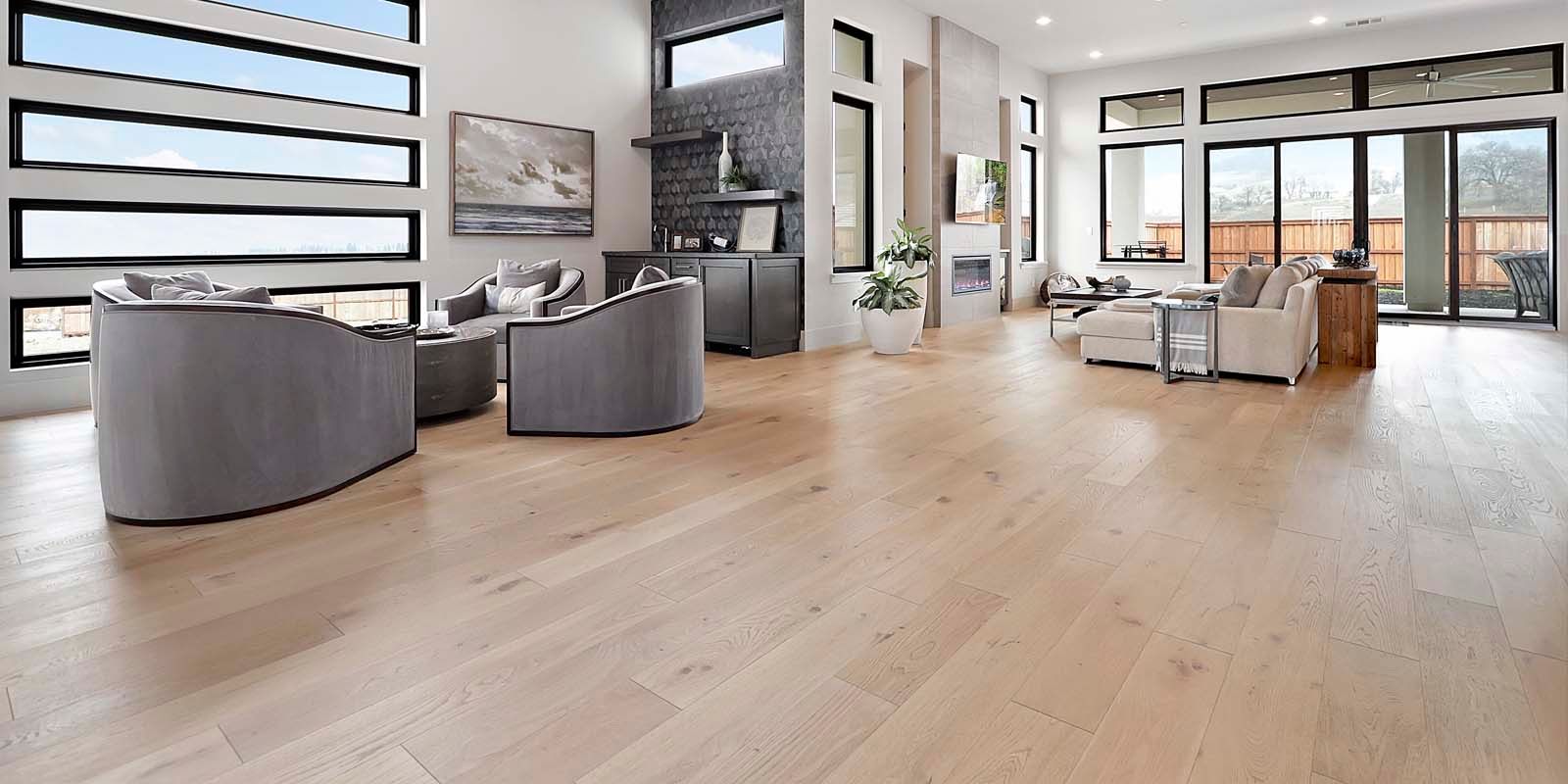
Solid hardwood flooring is made entirely of solid wood and is typically cut from a single piece of timber. Available in a variety of species, stains, and finishes, solid hardwood provides a natural, classic look that can add value to any home or business.
Pros of Solid Hardwood Flooring:
- Longevity & Durability – Solid hardwood can last for generations when properly maintained and refinished over time.
- Refinishing Capability – It can be sanded and refinished multiple times, allowing for restoration and customization.
- Natural Beauty – Solid hardwood showcases authentic wood grain patterns, offering an unmatched, luxurious aesthetic.
- Increased Home Value – Homes with solid hardwood flooring tend to have higher resale values.
Cons of Solid Hardwood Flooring:
- Moisture Sensitivity – Prone to expansion and contraction due to changes in humidity, making it less ideal for basements or high-moisture areas.
- Installation Limitations – Requires nailing or stapling down, making the installation process more labor-intensive and often requiring professional assistance.
Higher Cost – Generally more expensive than engineered hardwood, both in material and installation costs.
What is Engineered Hardwood Flooring?
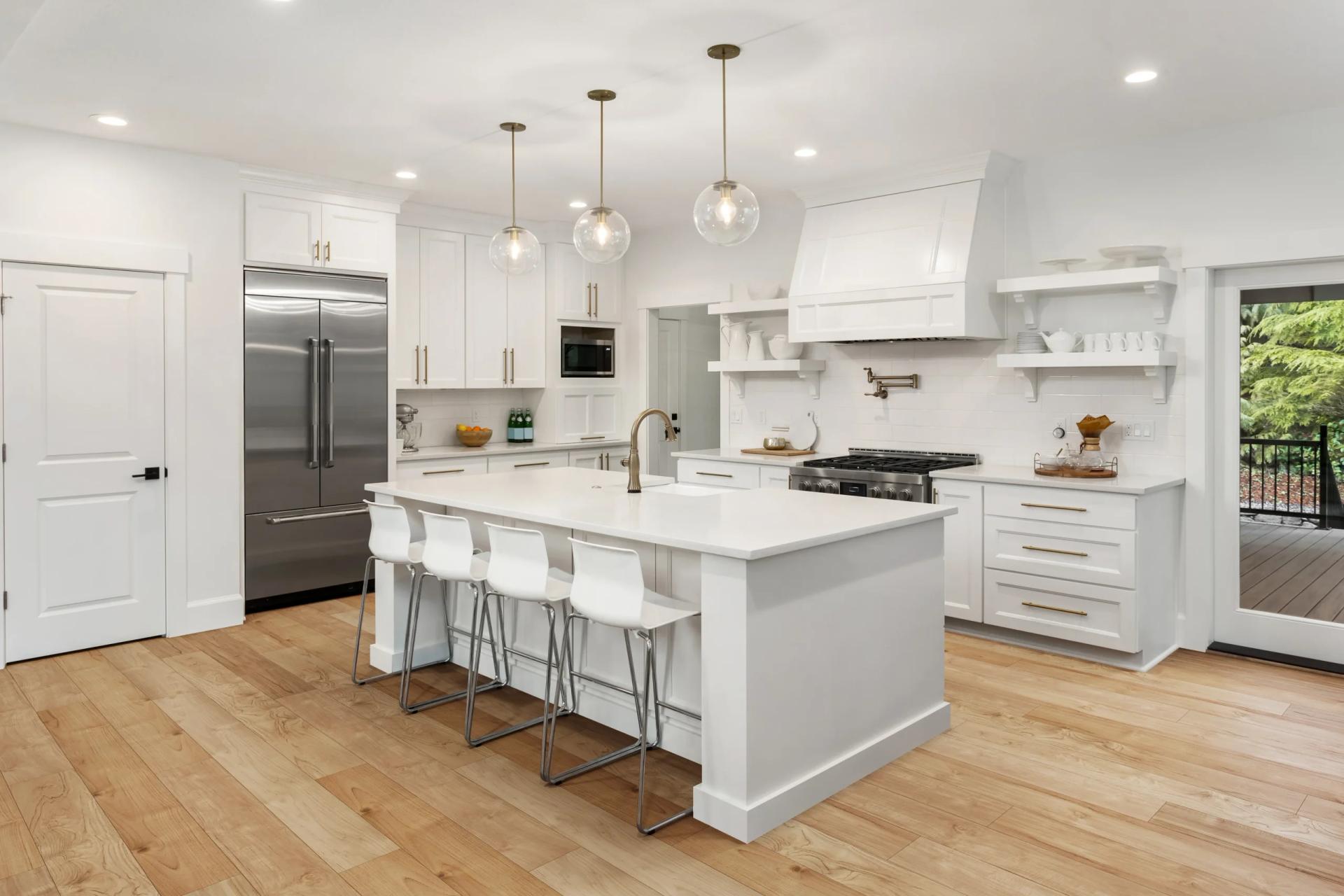
Engineered hardwood flooring consists of a top veneer layer of real hardwood bonded to multiple layers of plywood or high-density fiberboard (HDF). This construction enhances stability and resistance to environmental changes, making it a versatile flooring choice.
Pros of Engineered Hardwood Flooring:
- Greater Stability – The layered construction minimizes expansion and contraction, making it suitable for humid climates and below-grade installations like basements.
- Ease of Installation – Can be installed using various methods, including glue-down, floating, or click-lock, making DIY installation possible.
- Affordability – Typically more budget-friendly compared to solid hardwood, with lower installation costs.
- Aesthetic Versatility – Available in various wood species, finishes, and plank widths, engineered hardwood can mimic the look of solid hardwood.
Cons of Engineered Hardwood Flooring:
- Limited Refinishing – Depending on the thickness of the top veneer, engineered hardwood may only be refinished once or twice.
- Potential Lower Lifespan – While durable, engineered hardwood does not usually last as long as solid hardwood.
- Quality Variability – The durability and performance can vary significantly based on the quality of the core materials and veneer thickness.
Key Factors to Consider: Engineered vs Solid Hardwood
1. Durability & Longevity
Solid hardwood wins in terms of longevity, as it can be refinished multiple times over several decades. However, high-quality engineered hardwood can also be long-lasting if well-maintained, though its refinishing capability is limited.
2. Moisture Resistance
When comparing solid hardwood vs engineered hardwood, engineered hardwood is the better choice for moisture-prone areas due to its stable, multi-layered construction. Solid hardwood is more susceptible to warping and expansion from humidity changes.
3. Installation Methods
Solid hardwood requires professional installation via nailing or stapling to a wooden subfloor. Engineered hardwood, on the other hand, offers flexible installation methods, including floating, glue-down, and click-lock systems, making it a more accessible option for DIYers.
4. Cost Comparison
While both options vary in price based on species and quality, solid hardwood is generally more expensive both in material and installation. Engineered hardwood provides a more cost-effective solution without compromising on aesthetic appeal.
5. Aesthetic Appeal
Both solid vs engineered hardwood flooring offer stunning natural wood aesthetics. However, solid hardwood has an edge when it comes to deep grain patterns and a more authentic, luxurious feel. That said, high-quality engineered hardwood can closely resemble solid wood, making it an excellent alternative for budget-conscious buyers.
Engineered vs Solid Hardwood: Which is Best for You?
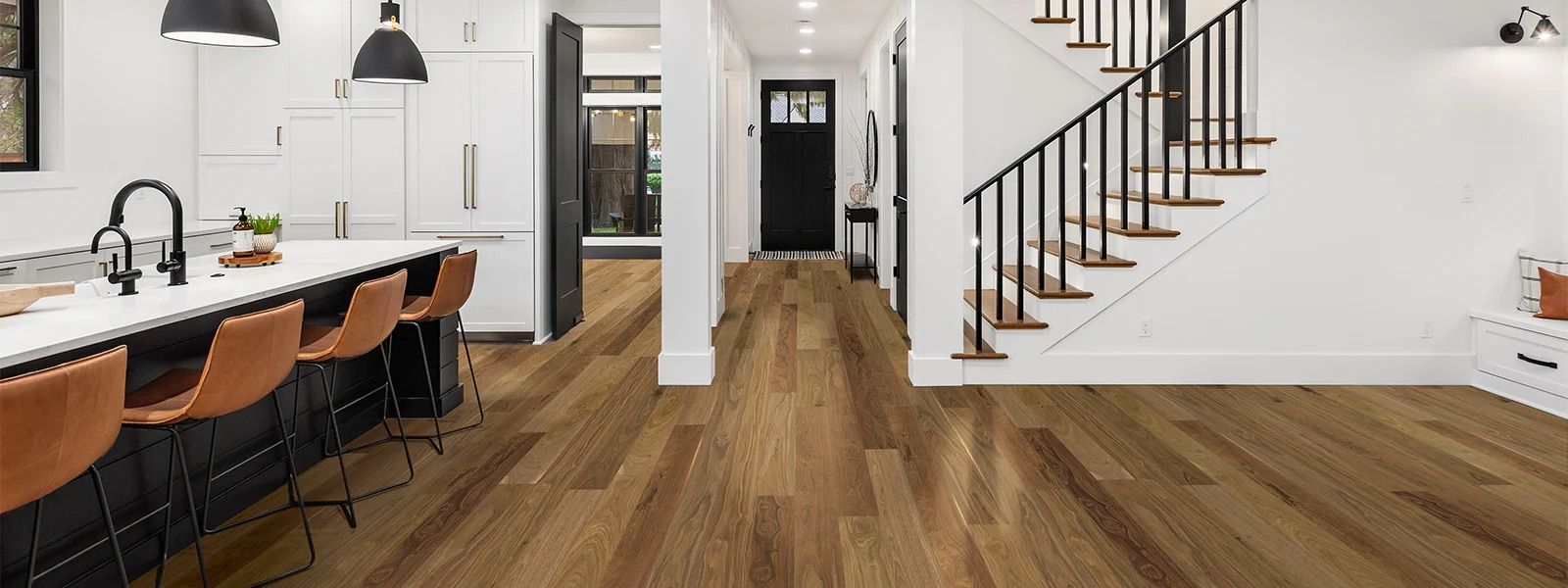
Deciding between solid hardwood vs engineered hardwood comes down to factors such as budget, location, durability needs, and aesthetic preferences.
- Choose solid hardwood if you want a flooring option that can last for generations, can be refinished multiple times, and provides the highest resale value.
- Choose engineered hardwood if you need a moisture-resistant, budget-friendly option that offers ease of installation and stability in different environments.
About La Mesa Flooring – Your Trusted Flooring Experts in San Diego, CA
At La Mesa Flooring, we are a locally owned, full-service flooring company specializing in high-quality flooring solutions, including engineered hardwood and solid hardwood flooring. Based in San Diego, CA, we take pride in offering a wide range of flooring options to meet the diverse needs of homeowners and businesses alike. Our expert team is committed to providing top-tier craftsmanship, professional installation, and exceptional customer service to ensure you find the perfect flooring for your space.
Looking to Install Hardwood Flooring In Your Home or Office in San Diego? Contact La Mesa Flooring Today!
Whether you’re drawn to the timeless appeal of solid hardwood or the versatile durability of engineered hardwood, choosing the right flooring can enhance the beauty and functionality of your home or business. If you’re in San Diego, CA, or the surrounding areas and looking to install new hardwood flooring, La Mesa Flooring is here to help. Contact us today to get started or learn more about our exceptional flooring services!
Is engineered hardwood more affordable than solid hardwood?
Yes, engineered hardwood is typically more cost-effective than solid hardwood. It also tends to have lower installation costs due to its flexible installation methods.
Does engineered hardwood look like real wood?
Yes, engineered hardwood has a real wood veneer on top, giving it the same authentic appearance as solid hardwood. High-quality engineered options can be nearly indistinguishable from solid wood.
Is solid hardwood or engineered hardwood better for pets?
Engineered hardwood can be a better option for pet owners since it is more resistant to moisture changes and scratches when treated with a strong finish. However, both types require regular maintenance to prevent damage.
How long does engineered hardwood last compared to solid hardwood?
Engineered hardwood typically lasts 20-30 years depending on wear and refinishing options, whereas solid hardwood can last over 100 years with proper care.